
The cabinet details nobody can quite name (but everybody notices)
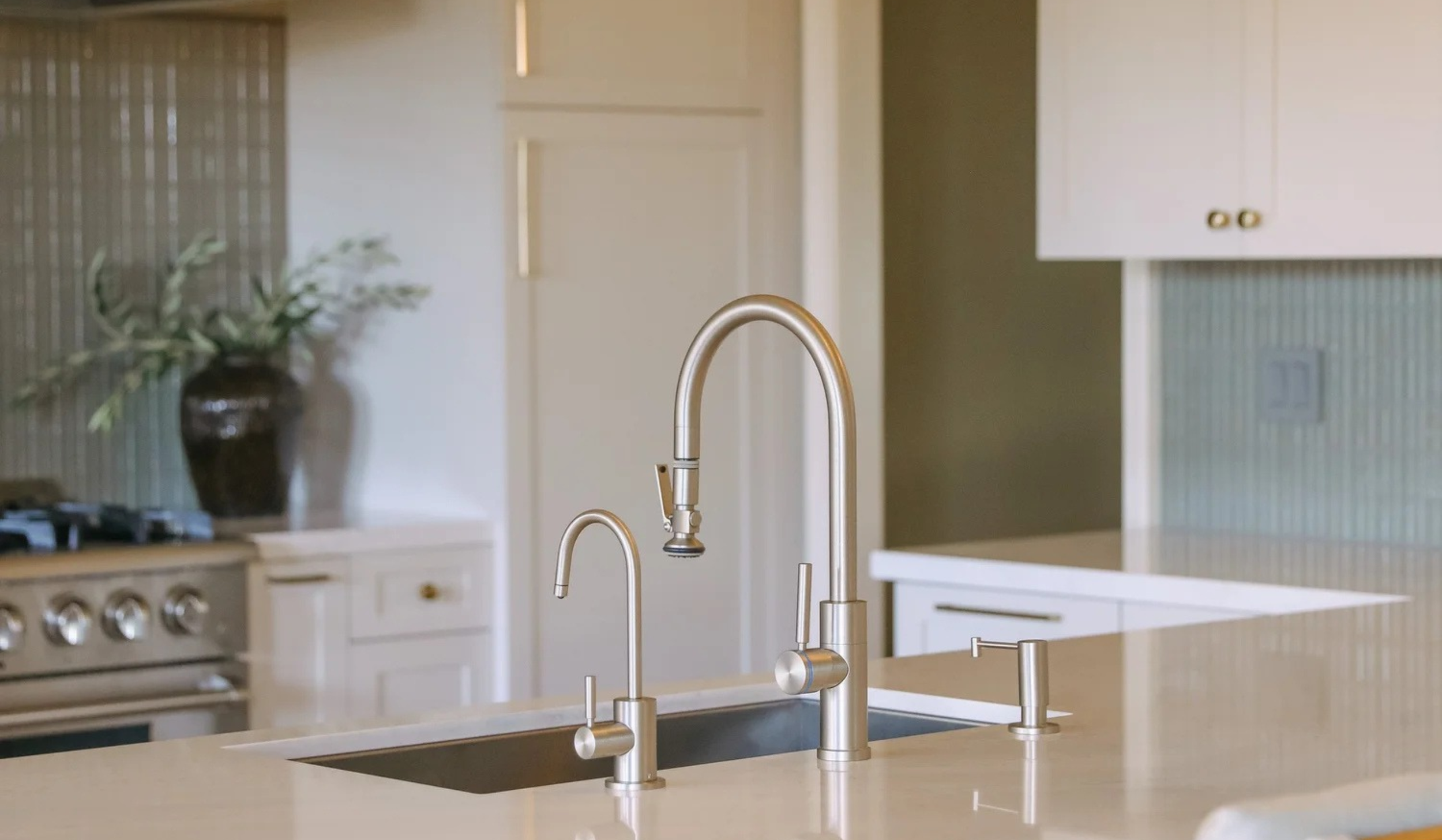
A kitchen doesn’t have to be huge to feel incredibly well designed. Some of the most custom-feeling kitchens I see are small ones, and it almost always comes down to cabinet finishing.
I mean the little decisions you layer on top of the paint color:
→ which door style goes where, how the drawers are treated,
→ whether the doors sit flush or on top of the frame,
→ and what the hardware and sheen are doing once the lights come on.
Those choices are usually the gap between two kinds of small kitchens. One feels builder-grade (you know the one, the same flat door repeated forty times like a wall of filing cabinets). The other feels intentional. (And square footage has very little to do with it.)
Here’s how to use these details in a small space, and how to get that custom look without blowing your whole budget on it.
Let’s get into it!
Kitchen Renovation on a Budget: Why Small Kitchens Have the Upper Hand
I’ll argue for this every time: sometimes smaller kitchens are actually better.
With less surface area, every detail gets noticed. There’s no long run of uppers for a choice to hide in. Your eye lands on the drawer fronts while you’re waiting for the kettle, and it notices.
That works in your favor. A small kitchen is easier to layer well because you can finish every surface with intention. You don’t have to ration your good ideas across thirty linear feet of cabinetry.
It’s also a smart way to approach a kitchen renovation on a budget. Fewer cabinets means you can spend a little more per detail. Upgrading door styles on eight cabinets is a very different conversation than upgrading them on twenty-five. Cabinet door and drawer details are also some of the more affordable ways to make a kitchen feel custom, especially compared to moving plumbing or knocking out a wall.
Mix Your Shaker Cabinet Doors and Slab Drawer Fronts
This is one of my favorite small kitchen cabinet ideas, and most people walk right past it.
Pair slab drawer fronts with five-piece shaker cabinet doors on the same run of cabinetry. The drawers stay clean and quiet. The doors bring a little shape and shadow. The contrast reads as thoughtful, because it is.
A quick refresher on the cabinet door styles in play:
Slab: one flat panel. No frame, no profile, no shadow line. It’s calm and modern, and the easiest to wipe down after spaghetti night.
Five-piece shaker: a recessed center panel framed by four pieces. That frame catches light and casts a soft shadow, which adds depth without adding another color or material.
Slab drawers are also kind to real life. There are no inside corners for crumbs, flour, and whatever the toddler was eating to settle into.
The rule that keeps it cohesive: use one style for drawers and one style for doors, with the same finish, color, and hardware everywhere. Change only one variable. If you also switch paint colors or hardware between them, it starts to look like two different kitchens that got smushed together.
When to keep it consistent instead: if your small kitchen already has a lot going on, one door style throughout might be the calmer call. That means things like a busy backsplash, heavily veined stone, or open shelves stacked with mismatched mugs. Mixing works best when everything around it gives it room to breathe.
DESIGN TIP:
Ask your cabinet maker for a sample door in each style, in your actual finish, and set them side by side on your counter. Paint behaves differently on a flat slab than on a shaker profile, so see both before you commit.
📖 RELATED: Still deciding which door profile is right for you? Read Cabinet Door Styles That Are Defining Kitchens Right Now (And How to Choose Yours). It breaks down slab, V-groove, slim shaker, and beaded doors so you can pick your pairing with confidence.
Mid Rails: The Cabinet Finishing Detail Most People Never Notice
A mid rail is the horizontal piece that runs across the middle of a five-piece door, splitting the center panel in two. It’s pretty standard on taller doors. It’s also a design choice you can play with on purpose.
One subtle move is to use mid rails through most of the kitchen, then skip them in one zone, like a bar area or a bank of drawers. It’s the kind of unexpected detail people can’t quite put their finger on. They just know the space feels considered.
Here’s the catch. Some mid rails are structural. They keep a tall door from warping or bowing over time. Removing one can affect how the door holds up, and in some cases whether your cabinet warranty still applies. Every manufacturer handles this differently, so ask your cabinet maker before you take a mid rail out of the plan.
Inset vs Overlay Cabinets: A Choice That Changes the Whole Look
The inset vs overlay cabinets decision shapes how finished your kitchen feels more than almost anything else on this list.
Inset cabinets sit flush inside the cabinet frame. You see the frame around every door and drawer, which gives the kitchen a furniture-like, built-by-hand feel. It’s a very quiet kind of fancy.
Overlay doors sit on top of the frame and cover most or all of it. They read cleaner and more modern, with fewer visible lines.
In a small kitchen, either one can look great. Inset typically costs more because it takes more precision to build and install. Weigh that honestly against the rest of your budget. If going inset means skipping the hardware you’ve been eyeing for months, that’s worth a second thought.
Cabinet Finishing Touches That Tie It All Together
Cabinet finishing is the last layer, and it’s what pulls your door and drawer choices into one story.
Look at your hardware and your kitchen cabinet sheen, and at how both work with the lighting and textures around them:
Satin softens the edges of a shaker profile.
Higher sheens bounce more light around a small room. They’ll also show every fingerprint from the kid who opens the snack drawer forty-seven times a day.
Hardware should feel related to your faucet and light fixtures, even if it doesn’t match them exactly.
DESIGN TIP:
Look at your samples in your own kitchen, in your own lighting, at 8 a.m. and 8 p.m. The showroom lighting is lying to you a little. 😉
📖 RELATED: Before you pick a sheen, settle the bigger question first. Stained Cabinets vs Painted: How to Decide on Your Cabinet Finish walks through how each one looks, wears, and lives in a real kitchen.
Small Kitchen, Big Cabinet Finishing Payoff
Here’s the thing. Good design comes down to what you do with the space you have, and a small kitchen gives you plenty to work with.
A compact kitchen can feel more designed than a giant one where every cabinet is just a copy of the one next to it. It just needs a smart mix of door and drawer styles, a well-placed mid rail moment, and a few details nobody can quite name. You don’t need a bottomless budget to get there, either. Thoughtful cabinet finishing will do a lot of the heavy lifting for you.
So pull your samples, trust your gut, and have a little fun with it!
Before You Pick Your Cabinet Door Styles, Read This:
Cabinet finishing details are the fun part. But they only work if the decisions underneath are solid. Unfortunately, that’s where most renovations go sideways (usually before a single cabinet gets ordered).
Grab my FREE guide here→ Before You Renovate: Every Homeowner Should Know the Top 7 Mistakes to Avoid
Inside, you’ll learn…
What “cabinetry” actually includes, and why two quotes for the same kitchen can look nothing alike
How to choose hardware that holds up, fits the space, and doesn’t collect grime
The drawer conversation that changes everything for my clients
Why overloading your cabinet layout with pull-outs and inserts can work against you
Read it now, so the fun part stays fun!

Meet Taylor: Your Central Coast Kitchen Designer
Taylor Ferrell is the cabinetry-obsessed, cappuccino-fueled founder of SALT Design Co., designing full spaces for full lives on California’s Central Coast and virtually nationwide. She’s a mom of two who designs around the backpacks, the dog, and the last-minute dinner guests. Stuck on a cabinet decision? Hop on a 30-minute Zoom with Taylor and get it sorted.